The Devil Wears Prada 2 director David Frankel and writer Aline Brosh McKenna spoke with ComingSoon to celebrate 2026’s most fashionable movie coming to streaming. The duo discussed their approach to the film, its celebrity cameos, and an idea for The Devil Wears Prada 3. The hit film begins streaming on Disney+ on July 29.
“Andy Sachs (Anne Hathaway) returns to Runway magazine as the new features editor, where she finds her formidable former boss Miranda (Meryl Streep) facing threats to her glossy print empire. Familiar frenemies and fresh faces join the catwalk in this stylish sequel,” says the official synopsis.
Tyler Treese: David, this clearly wasn’t a rushed sequel. It took about 20 years to fully come together, and I don’t think Anne and Meryl would have been convinced to do a rushed sequel. Can you speak to that mindset that, if you were going to touch this film—which was a high point for everybody—it had to be done the right way? I feel like a lot of sequels go in with that mindset, but it’s really hard to pull off, and you don’t always feel that in the finished product.
David Frankel: Thank you for implying that we did pull it off.
You did.
Frankel: I appreciate that. Twenty years ago, when the movie first had some initial success, of course there were conversations about doing a sequel. We just couldn’t imagine how we would get these two characters back in the same room again. Andy threw her phone in the fountain, and Meryl drove off. It came up regularly over the years.
It wasn’t until two years ago when Aline had this thought that maybe the world had shifted so much, and Miranda and Andy were so much older, that there was an excuse to get them back working together. There were also themes about the decline of journalism, the rise of AI, the role of fashion, and how that has shifted in the culture.
There were so many ideas to address in a movie that, by the time Aline delivered her first draft to the studio, David Greenbaum, the head of the studio, said, “I would make this movie even if it weren’t a sequel because it’s so compelling, the characters are so rich, and the themes are so important.”
That was really gratifying. I think the actors felt the same way. It wasn’t just, “It will be fun to spend three months together.” Each of them found something really vital that was being said about their characters.
Aline, as David touched on, journalism is in a bit of a free fall at the moment, at least economically and business-wise. This is captured so well in the film. Can you speak to your interest in depicting that and having Andy really learn to compromise after doing work she was proud of, and then dealing with the modern landscape by going back to the fashion world?
Aline Brosh McKenna: I think everybody now, in whatever circumstance you’re in, is thinking, “This may not be exactly what I wanted, but I can make this into what I want.” That’s what she’s trying to do.
The impetus was somebody who has completely lost her publication. It’s not just that she has lost her job. They have all lost their jobs. She is reunited with someone who is a little bit in trouble.
During that period of time when famous people were getting in trouble every day, I was imagining how much trouble Miranda Priestly would be in on a regular basis. The idea is that Andy is supposed to save her and help her, but she really has her own motivations.
In some ways, I think of these movies as buddy comedies. They’re so much more than that. They’re ensemble comedies and workplace comedies, but the heart of it is these two women and their hopefully funny moral and ethical differences. They want something very different out of the situation that is set up in the movie.
Spoiler alert: When Irv dies, they were just about to get to a point where they both felt like they were in the right position, and then Miranda loses her sponsor and Andy loses her sponsor. That turns everything upside down again.
A lot of what has changed in these businesses is that, all of a sudden, an institution disappears or a person disappears. I relate to it in terms of how fast the change in Hollywood has been. Sometimes you get hired to do something and think, “I hope the person who hired me is still there when I turn this in.”
That speed of change in terms of who the gatekeepers are is dizzying. You have to be able to adapt, and that’s what Andy ultimately learns to do. She learns to adapt a bit.
Tyler Treese: David, it’s funny. I’m sure that over the past 20 years, you were constantly being asked about a second movie, and now you’re going to be asked about a third for however long. Is there even an inkling of an idea of where you want these characters to go, or are you just trying to enjoy that you got the second one made?
David Frankel: It is shocking. I was literally off-camera telling Aline how shocking it is that we made a sequel. The fact that we’re talking about it at all is wonderful and miraculous.
At the same time, I have a lot of curiosity about where they go from here. Where journalism goes, where the magazine world goes, and where these characters go are always going to be interesting to me. I’m in love with them, and I’m in love with that family of characters.
I’m really curious where they end up. Miranda can’t do it forever, and that’s going to change the landscape within Runway magazine. What happens is a question I would like to see the answer to.
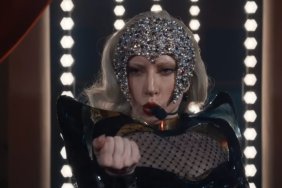
Aline, my last question: I was curious how celebrity cameos are handled. You have Lady Gaga, for example. How is that written into the script, and how does it morph every time?
Aline Brosh McKenna: Gaga is not really a cameo. Gaga is more of a part that was handled through casting.
The other cameos seem really easy-breezy, but there are logistical challenges in getting famous people somewhere on a Tuesday at a certain time, getting them dressed, and getting them where they need to go.
Frankel: To work for 12 hours in 95-degree heat.
McKenna: I kept saying to them, “Make sure they know that this is not a situation where you show up, do your shot, and leave,” because people who don’t work on movies don’t always know that they will be there all day. They’ll be bored.
Frankel: Donatella [Versace] is a lovely person. She came in, we did one take, and she said, “Okay, I’m going to see you.”
McKenna: We were like, “No, you need to do that a few more times.” I could hear her saying to somebody, “I don’t know why we keep doing this.” I get it.
It was fun to make up those lists of people and then see who was available and who could show up, particularly when figuring out who Miranda’s friends would be. The guiding principle was that everyone there is notably excellent at their job, which is why you can get everybody from Jon Batiste to Cat, Tina Brown, and Ronny Chieng. They’re all notably excellent at what they do. That was really fun.
Thanks to David Frankel and Aline Brosh McKenna for taking the time to talk about The Devil Wears Prada 2.