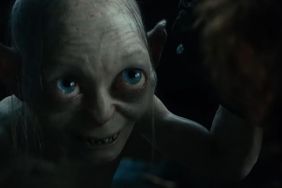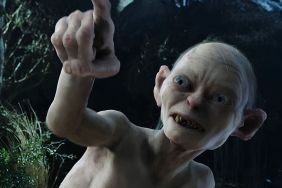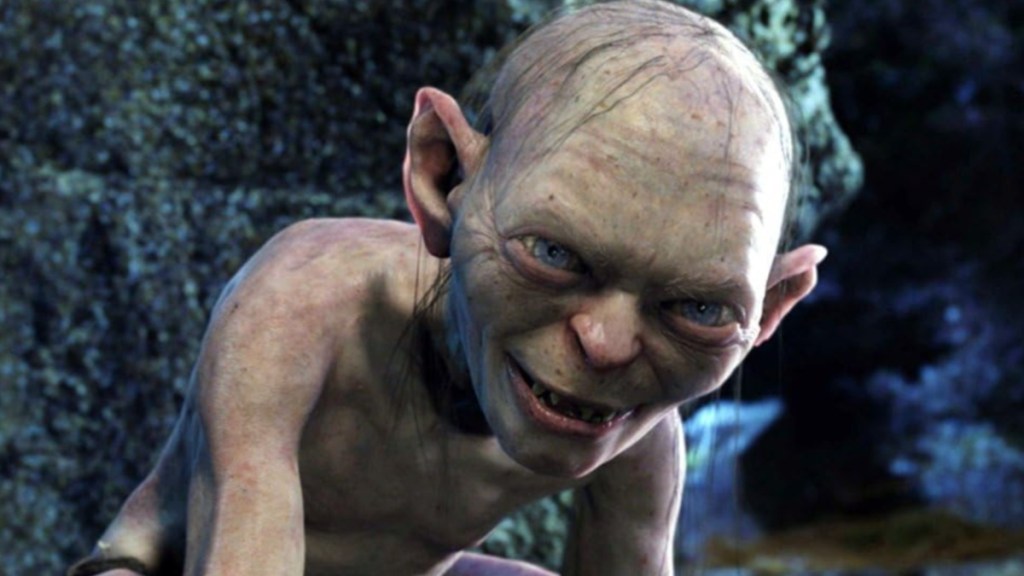
As AI takes over Hollywood for better and for worse, audiences have every right to feel that the technology has no place in the filmmaking industry. However, in the case of The Lord of the Rings: The Hunt for Gollum, Andy Serkis is using the new technology the only way it should be used in movies.
In an era where AI is being used to create its own digital actors, location scout, create storyboards, and generate final visual effects, among other tasks, Serkis is using it for something pretty mundane: de-aging the movie’s actors. While Serkis declined to share with Variety which actors will be de-aged in The Hunt for Gollum, it’s most likely Ian McKellen, Elijah Wood, and Lee Pace, who are returning to play characters who shouldn’t look 10 to 25 years older than they last did.
Why using AI for de-aging makes sense for LOTR: The Hunt for Gollum
De-aging technology has evolved significantly since it was first memorably used 20 years ago to erase all signs of wrinkles and old age from Patrick Stewart and McKellen in X-Men: The Last Stand. The finished result looked uncanny, and de-aging in general did for a long time.
However, just as CGI improved with time, so has de-aging. Actors can now reprise roles they last played decades ago with the help of de-aging and a little movie magic. Take, for instance, 2023’s Indiana Jones and the Dial of Destiny, which saw AI used to recreate an ’80s Harrison Ford.
Ford explained in 2023 on The Late Show with Stephen Colbert how Lucasfilm used AI for the opening scene, which was set in 1944, the decade during which most of Indiana Jones’ adventures occurred.
“That is my actual face at that age. They have this artificial intelligence (AI) programme. It can go through every foot of film that Lucasfilm owns because I did a bunch of movies for them and they have all this footage including film that wasn’t printed: stock,” Ford shared. “They could mine it from where the light is coming from, the expression. But that’s my actual face. Then I put little dots on my face and I say the words and they make it. It’s fantastic.”
Serkis likely plans to use a similar technique to de-age McKellen, Wood, and Pace. There’s no doubt the production will have access to all the footage from The Lord of the Rings and The Hobbit trilogies, whose reference images and recordings will help with de-aging post-production as visual effects artists likely fine-tune the final product.
I’m against AI as much as the next guy, but this is a pretty minor use of it, and one that I can get behind, especially if it helps make the finished film look better. For those still on the fence about seeing LOTR use AI, I’m also here to report that this is not a new development. Serkis reminded Variety that Peter Jackson “created MASSIVE, which was a program which allowed 1000s of orcs to all have their own individual mindset. So that is a brilliant example of an incredible use of AI.”
So, instead of blowing this up into some form of controversy, fans should realize that AI has been around Hollywood long before they had a catch-all name for it and that it can be used for good. Here’s hoping that more filmmakers like Serkis will use it to improve their productions and not as a way to cut corners or replace real talented individuals.
Originally reported by Lee Freitag for ComingSoon.