This is one of the most blatant cash grabs in recent memory. There are tons of incompetently made movies that are significantly worse than the live-action Moana, and yet, I respect those films and filmmakers so much more than I respect this. The last time I watched a movie so antithetical to creativity or a soul was last year’s How to Train Your Dragon live-action remake. That film came out a mere 15 years after the original, and somehow, this movie has beaten that by a landslide.
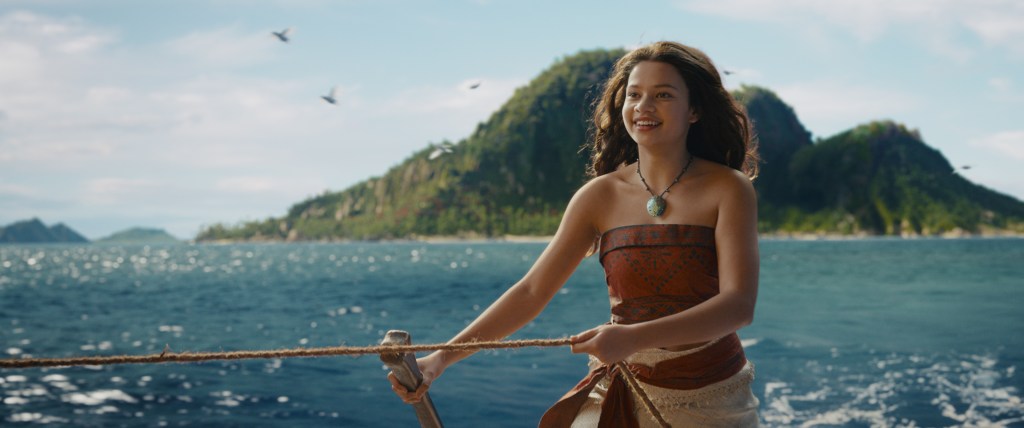
Sadly, the new Moana is pathetic. It is a shot-for-shot, line-by-line carbon copy of the original without one single original idea. It’s genuinely horrifying how creatively bankrupt this is. Cash grabs don’t get more overt than this. Every single line of dialogue is either exactly the same as the original or paraphrased. There is not one new idea or surprise in the entire film. 2019’s The Lion King remake is more different from its source material than the live-action Moana is from 2016’s Moana.
The film is directed by Thomas Kail, who has primarily directed theatre and the 2020 Disney+ stage recording of Hamilton. It makes sense that Disney would hire a director who has zero actual experience in developing a cinematic directorial voice. The best I can say about this film is that the shots are in focus, and everyone who worked on it got paid. And that’s not much, considering that Disney is the studio that pioneered animation and has historically pushed the boundaries of what filmmaking can do.
Here, we have a movie that does not innovate — it imitates. Kail does not deserve one iota of credit for directing this film when John Musker and Ron Clements are responsible for giving us the 2016 Moana. Whenever there’s a pretty shot in this movie, it is a direct translation of their film. His storyboards had to have been photocopies of theirs! If I’m taking a test and I copy every answer off of the person next to me, our answers are going to display the same level of competence, but I’m not the one who did the hard work of coming up with the answers, am I?
Now, you may be asking, “What did you expect?! You’re surprised that a remake is similar to the original?!” I want you to think about the best movie remakes: you might think of John Carpenter’s The Thing, David Cronenberg’s The Fly, Brian De Palma’s Scarface, or Steven Soderbergh’s Ocean’s 11. What makes these movies great? They all have strong directorial voices behind them that push storytelling forward, update the filmmaking for a new era, and use the premise of the original to give audiences a different experience. These films came out so long after their originals that it’s easy to forget that any of these movies were remakes to begin with.
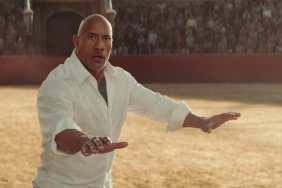
I’ve already delved deep into how none of these attributes apply to the live-action Moana, a film so lacking in any originality that they bring back Dwayne Johnson as Maui and Jemaine Clement as Tamatoa to repeat their exact same lines from 10 years ago, word for word. Think about it: your money is precious. You probably already have a Disney+ subscription. Why would you willingly go watch an inferior version of a movie that you can already stream at home? Why pay hard-earned money for zero originality?
It’s disheartening to see how the live-action Moana takes jokes that were really funny in the animated film and waters them down (pun intended). The opening scene, where Gramma Tala tells the story of Te Fiti and Maui to a group of horrified kids and a starry-eyed Moana, is hysterical in the animated film because of how expressive and over-the-top the reactions are. Here, the joke works less because, rather than an entire group of kids, the camera goes very tight on Moana and the two kids around her. And when they freak out, it’s not as funny because the children aren’t giving the precise performances that animation allows.
One of the funniest little moments in the original is when Moana is teaching a dance class and one boy goes super over-the-top with his dancing and winks and flirts with her. In the live-action film, this scene lasts about two seconds, cuts off awkwardly, and we don’t get a second of this joke. When a remake changes bits from the original, they’re supposed to be improvements. Or, at the very least, a bold new creative idea. What good does removing very funny jokes do for a film? Why would I pay money to watch a movie in theaters and laugh less when I can stream the same movie at home and laugh more?
This year, when promoting Project Hail Mary, Ryan Gosling said something important: “It’s not your job to keep movie theaters open, it’s our job to make things that make it worth you coming out.” Disney has not been doing that lately, especially with this film. An original horror movie with a fascinating concept like this year’s Obsession will do historical numbers at the box office because of word of mouth. Now, is anyone besides small children excited about a remake of a 10-year-old movie that will be streamable on Disney+ in a few months? Why does anyone need to see this?
The trend of the live-action remake needs to die. It is antithetical to the human creativity required in animation. This film feels like you took the animated 2016 Moana and asked an A.I. chatbot to put a live-action filter over it. From a cinematography standpoint, it’s not as colorful as the original, and it continues the modern trend of even, dull lighting and a shallow depth of field. There isn’t a single moment in this film that felt truly special. There were no meaningful changes that elevated the story, nor was there a single scene that felt more exciting and dynamic in live-action as opposed to animation.
A live-action remake’s biggest enemy is the phrase, “If it ain’t broke, don’t fix it.” Because you can’t improve on perfection. It’s like singing a cover of the most famous songs; even if you have a great voice, the OG always wins. If something in the original really works, you either leave it in there or you replace it with something better. The live-action Mulan is very different from 1998’s Mulan, but it’s a worse film in every way. The live-action Moana takes the safe route, so afraid to offend anyone that it becomes offensive.
It’s genuinely shameful what’s been going on with Hollywood in recent years, but it’s cyclical. Disney wants returns on their investments, so that’s why we get an overabundance of sequels and remakes. That leads to box office hits like The Devil Wears Prada 2 and Toy Story 5. But it can sometimes be at the expense of a story worth telling. 2026’s Moana isn’t a movie that needed to be made, nor was anyone asking for it. But sometimes, studios need to cash in on their valuable IPs so that they can afford to take the financial/creative risk on original films like Hoppers and Elio, which are not guaranteed box office draws.
With consumer habits changing, studios often find themselves scrambling to keep up, not always knowing how to make an original, non-IP movie feel like a true must-see event. If I were in charge at Disney and I had released box office bombs like Strange World and Wish, I’d probably be greenlighting some sequels and live-action remakes too. But sometimes, the best box office draw is quality, which can lead to word of mouth and create a must-see event. For now, Moana is not a film you must see or talk about, and you won’t find an ounce of quality here.
SCORE: 4/10
As ComingSoon’s review policy explains, a score of 4 equates to “Poor.” The negatives outweigh the positive aspects, making it a struggle to get through.
Disclosure: ComingSoon attended a press screening for our Moana review.