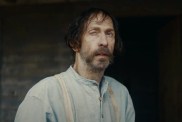
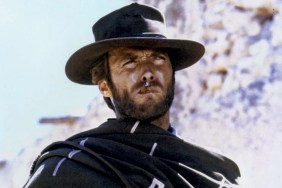
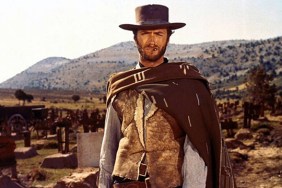
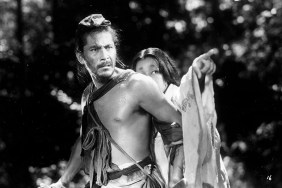
Sergio Leone‘s A Fistful of Dollars (1964) is at once dramatically different and very much the same as its inspiration, Akira Kurosawa‘s Yojimbo (1961). In the simplest of terms, the two follow a stranger into a corrupt town where they eventually play two rival gangs against one another, freeing the town in the end. Kurowsawa’s film, in my opinion, is one of his best, mixing comedy, action and plenty of dramatic tension, boiled down to a brisk 110 minute feature I could sit down and absorb at a moment’s notice.
[amz asin=”B00HZN8TBC” size=”small”]Leone’s A Fistful of Dollars is just as wonderful as the translation from samurai to lone gunman is almost a no-brainer, but what’s truly amazing is how it doesn’t feel like a remake, but merely a different adaptation of the same story. Leone made the film his own, the casting of Clint Eastwood as his western equivalent to Toshiro Mifune‘s ronin puts the two one damn near even ground.
What’s fascinating to read is the oft-curmudgeonly Bosley Crowther‘s New York Times review of Fistful from 1967 where he speaks of the film’s Western cliches:
Just about every Western cliche that went with the old formula of the cool and mysterious gunslinger who blows into an evil frontier town and takes on the wicked, greedy varmints, knocking them off one by one, is in this egregiously synthetic but engrossingly morbid, violent film, put together as an Italian-German-Spanish co-production and shot for the most part in Spain.
[amz asin=”B00319HT9W” size=”small”]Of course, if you read his, sadly negative, review of Yojimbo from five years earlier he notes the “straight transposition of Western film clichés” with comparisons to Western classics such as High Noon, Shane or Red River. This is no surprise, Kurosawa loved the American Western, it’s what makes his films so immediately accessible to Western audiences and gives good reason as to why Seven Samurai (which would later be remade by John Sturges as The Magnificent Seven) was the first Japanese film to become a major success in the United States.
With Kurosawa’s love of the American Western and John Ford serving as something of his primary influence, it’s almost as if the remaking of his samurai films into American Westerns was a natural trajectory.
I bring all this up as a result of the video below that just popped over at YouTube, splicing the two films together, and without narration examining their similarities in narrative, though also giving value to their differences, which are better understood visually than through words.