The draw of a period piece is twofold. We can travel back in time to another world, where the style, art, technology and social values differ from our own, and more importantly, observe how those differences, and the characters and locations that exhibit them, reflect on the present. AMC’s revered 1960s ad agency drama “Mad Men” not only accomplishes these goals with aplomb, it does so in an entirely original fashion, exploring such disparate elements as civil rights, feminism, office politics, jealousy, hypocrisy, and the very nature of love, possession, happiness, and identity.
In 2007, “Mad Men” entered a TV landscape dominated by “American Idol“, “Big Bang Theory” and “Gossip Girl“. The show’s laconic pacing and relatively low-stakes plotting set it apart from a narrative standpoint, especially as its run continued and thrillers like Showtime’s “Homeland” and AMC stablemates “Breaking Bad” and “The Walking Dead” drew in more viewers. In its production values, “Mad Men” emerged as an immediate standout with its immersive and authentic set and costume design. The result was nearly universal critical acclaim, a steadily growing fan base of millions and 15 Emmys, including 5 straight years of wins for Best Drama.
Beyond industry plaudits and commercial success, the show has had a tremendous impact on popular culture. A handful of series set in the 1960s or dealing with advertising began to spring up on competing networks, only to be canceled after a season or two. Musicals written or set in the 60s dominated Broadway for several years, and interest in the clothing and decor of the period saw a resurgence. However, the program’s most potent influence – and the true extent of this has yet to be seen – is in its characterizations.
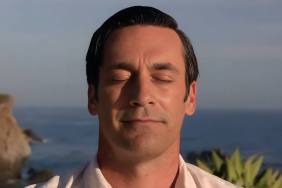
Stoic, enigmatic protagonist Don Draper, brilliantly played by the previously undiscovered actor Jon Hamm, set an intriguing new template for a television leading man. Sitting somewhere between Moneyball‘s idealistic paragon Billy Beane and murderous, greedy antiheroes like Tony Soprano or Walter White, Don walks an uneasy line between confident leader and hopeless alcoholic, philandering heel and loving father, genius artist and abusive boss.
Alternately loved and despised by his subordinates and peers, Don’s story is made all the more compelling for the initial obfuscation of his past, which in a storytelling masterstroke is doled out in tantalizingly short flashbacks by showrunner Matthew Weiner. The result is a consistently fascinating character who we still don’t really know very well even after seven seasons, and who doesn’t always seem to fully know or understand himself.
Don’s ultimate fate has, of course, been the subject of widespread and fervent speculation as the eve of the final season’s premiere on April 5 approaches (if you miss the AMC broadcast, you can catch the premiere on Google Play or DirecTV, which also offer the series in HD). Weiner’s previous involvement in “The Sopranos“, a show notorious for its maddeningly vague ending, has led some to expect a similarly frustrating and subversive finale for “Mad Men”. It’s always possible the show could end with an enactment of its opening credits, in which a male silhouette, presumably Don, plummets from the top of a city office building, but that seems a bit too obvious for Weiner.
Another theory is that the whole story is being told by Don’s daughter Sally from present day, which not only seems tremendously unsatisfying from a narrative standpoint but fails to account for the fact Sally simply wouldn’t have any knowledge of the vast majority of events that take place on the show.
Among the more plausible and appealing theories are the notion Don may turn out to be D.B. Cooper, a real life con artist who hijacked a plane in 1971. Cooper made off with $200,000 before parachuting out of the plane and disappearing forever. Many viewers who hope for a positive ending would like to see Don straighten out and make a romantic relationship work, although they vary widely on who it should be. Don’s first love, first wife, and mother of his children, Betty (January Jones), would be the most prominent choice, but she’s currently hitched to headstrong politician Henry Francis (Christopher Stanley). Could Don end up with longtime associate Peggy Olsen (Elizabeth Moss)? They’ve had their ups and downs, but at the core of their relationship is a professional respect that could be parlayed into a stable union.
I’d love to see Don get close to Joan Harris (Christina Hendricks), the voluptuous and pragmatic office manager who serves as audience surrogate for many viewers. No matter what the ending, we can be sure that Weiner will deliver what he always has – another season full of surprises, great performances, timely humor, and the most thoughtful plotting and characterization on television.