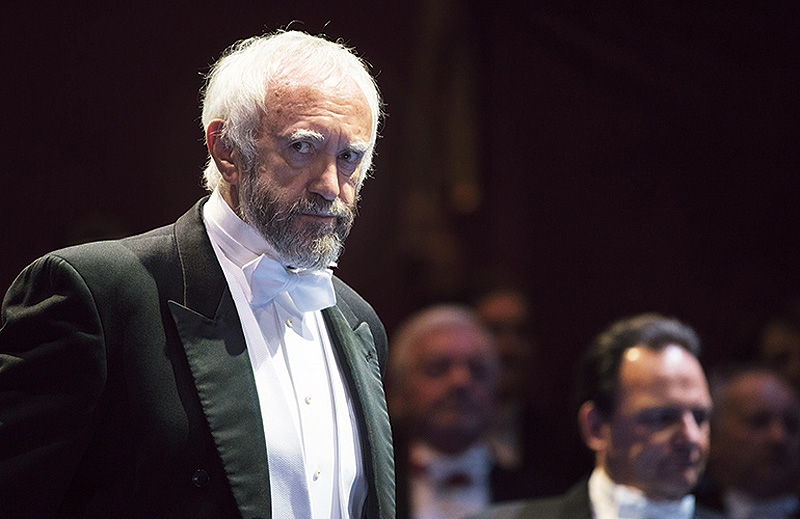
ComingSoon.net got the chance to speak with acclaimed British actor Jonathan Pryce about his acclaimed role in the Oscar-nominated film The Wife, as well as his work on Game of Thrones, Something Wicked This Way Comes, and upcoming films The Man Who Killed Don Quixote and The Pope! Check out the full interview below!
Starring six-time Academy Award nominee Glenn Close, who received a Golden Globe nomination for Best Actress in a Motion Picture Drama for her performance, and Jonathan Pryce, the film adaptation of Meg Wolitzer’s critically acclaimed novel The Wife arrives on digital January 22 and on Blu-ray & DVD January 29 from Sony Pictures Home Entertainment.
Click here to purchase The Wife on Blu-ray!
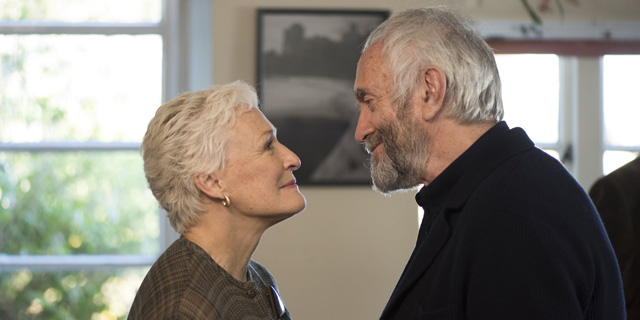
After nearly forty years of marriage, Joan and Joe Castleman (Glenn Close and Jonathan Pryce) are complements. Where Joe is casual, Joan is elegant. Where Joe is vain, Joan is self-effacing. And where Joe enjoys his very public role as Great American Novelist, Joan pours her considerable intellect, grace, charm, and diplomacy into the private role of Great Man’s Wife. Joe is about to be awarded the Nobel Prize for his acclaimed and prolific body of work. Joe’s literary star has blazed since he and Joan first met in the late 1950. THE WIFE interweaves the story of the couple’s youthful passion and ambition with a portrait of a marriage, thirty-plus years later–a lifetime’s shared compromises, secrets, betrayals, and mutual love.
In the film that truly embodies the saying “Behind every successful man, there is a strong woman,” the story provides a revealing look into the 40-year relationship of Joan and Joe Castleman, (Close and Pryce) and the world of literature for female writers. As Joe is about to be awarded the Nobel Prize for literature, the win threatens to expose the details and arrangements that define their marriage.
The Wife features a stellar cast that also includes Golden Globe winner Christian Slater, Max Irons and introducing Annie Starke, daughter of Glenn Close, who plays the younger Joan Castleman.
Certified Fresh on Rotten Tomatoes, critics have embraced the film and praised Glenn Close’s performance as one to watch this awards season. To date, she has been nominated for a Golden Globe for Best Actress Motion Picture Drama, a Gotham Award for Best Actress and Independent Spirit Award for Best Female Lead. Meg Wolitzer’s best-selling book has been beautifully adapted to the screen by Emmy winner Jane Anderson (Olive Kitteridge).
The digital, Blu-ray and DVD release of The Wife includes the featurette “Keeping Secrets: Glenn Close on The Wife” in which the acclaimed actress discusses the process of creating this intricate character, her storied career playing complex women and the culturally relevant moment in which the film is being released. Two Q&A’s are also included — “In Conversation With Cast of The Wife: Q&A featuring Glenn Close, Jonathan Pryce, Annie Starke, Christian Slater and Björn Runge” and “Q&A with author Meg Wolitzer and Glenn Close”.
The Wife is adapted by Jane Anderson from the Meg Wolitzer novel of the same name and was directed by Björn Runge. The film was produced by Claudia Bluemhuber, Piodor Gustafsson, Rosalie Swedlin, Meta Louise Foldager Sørensen and Piers Tempest; and executive produced by Jane Anderson, Gero Bauknecht, Nina Bisgaard, Florian Dargel, Tomas Eskilsson, Steve Golin, Hugo Grumbar, Tim Haslam, Björn Runge and Gerd Schepers.
Blu-ray, DVD and Digital Bonus Materials Include:
• Keeping Secrets: Glenn Close on The Wife
• In Conversation With Cast of The Wife: Q&A featuring Glenn Close, Jonathan Pryce, Annie Starke, Christian Slater and Björn Runge
• Q&A with author Meg Wolitzer and Glenn Close
ComingSoon.net: Have you been able to talk to Glenn yet about her Oscar nomination this morning?
Jonathan Pryce: I was just composing a silly email to her. I don’t know if you know this app called JibJab, where you put people’s faces on kind of cartoon videos and things? I was just going to compose something funny for her. So I was in the middle of doing that. I don’t have anything suitable yet, but I’ll be in touch with her soon.
CS: You two have both gotten a lot of accolades for “The Wife” and it’s been a pretty big success. Now that the awards circuit is at its apex, do you see any parallels between this movie about being on an awards circuit and then being on the awards circuit for this movie?
Pryce: When all these nominations are coming out, I did send her a a message that she does realize it should’ve been me, in line with it should’ve been her, you know? So I wrote a whole scenario out for her, where she threw her award out of the window and all of this stuff and I chase after it saying, “It’s mine, it’s mine.” (laughs) There are parallels, yeah. And it’s an odd situation to be in, but the roles are reversed very much. But I am just very happy that it’s getting all this attention for the film and for Björn’s work. Björn Runge, the director, because it was never made with an eye on its commercial prospects, but with an eye of it being seen, obviously. It was made in a very personal way to the three of us. It’s great that it’s been seen to be that kind of film that has something to say and it’s a story film and I keep saying to people, “Be warned, it’s not a date film.” I’m happy for Glenn, obviously, but I’m very happy for the film.
CS: Your character, Joe, getting this award opens up all of these old wounds for the couple. So when you were filming, how do you and Glenn track where you are in the escalation of emotions in any given scene? Because I’m assuming you shot it out of order?
Pryce: Some bits of it were out of order. We started at the beginning, with the lovemaking scene. That was our first day of shooting. And things pretty much were in chronological order. Spoiler alert: The scene where I die was, I think, my last day of filming. We didn’t want to take any chances of me dying too soon. So as far as I can remember, it was certainly more chronological than a lot of film shoots that you get to do. And of course, there wasn’t a lot of working things out for us. The characters were very clearly delineated and it was to be with people who are our age, with our sensibilities as both of us being actors and both of us being artists. There was quite a few parallels to be drawn from our lives, not the bad things. But I think we, both of us, understood those characters very well. So the rehearsals before each scene we shot were usually about how are we going to tell this story, not why are we telling this story or what are we telling. We knew very much what each scene was meant to say. I think it’s why Glenn and I work together so well, because both of us having a theater background, we know how to work and how to rehearse and how to make the text come alive. And also, Björn has a theater background, so he was very much part of that process.
CS: It is almost kind of a chamber piece. Movies like this, I’m sure you know, are becoming rarer and rarer, dealing with people of a certain age and just dramas with no explosions. Was it like a gift, getting offered this opportunity to do a real movie for adults in this day and age?
Pryce: Yes, these scripts are quite rare and that’s why I think it took so long to actually get it made. I mean, I’ve been involved with things that have taken equally as long to come to the screen. There was a time when this kind of film was made more often, and certainly in Europe: Scandinavian films, French cinema. French cinema, you still find quite a bit of adult themed movies, and family relationship movies. So they are quite rare. I was thrilled when I read it and I knew immediately I wanted to do it. And of course, I also knew when I read it that Glenn was in line to play the wife, so that was an added bonus.
CS: And there’s also a lot of flashbacks. Did you an Harry Lloyd connect at all about how you were playing the character, your voice, your mannerisms, all that sort of thing?
Pryce: Yeah, well he had the work to do. I didn’t have to adjust to him at all. I thought what I’m doing, you can find your way around it. But of course, the downside of that for Harry was that he didn’t get a chance to see me work on the film because they shot all that stuff before Glenn and I got there. That had all happened. But I know Harry, and he knows me and this is, I think at least the third project that we’ve been involved in. I mean, he being in “Game of Thrones,” me in “Game of Thrones,” and we were both in “Wolf Hall” and we had a scene together in “Wolf Hall.” So he knows me. And I thought he did, you know, there’s no point in doing an impersonation because he looks something like I might have looked 30 odd years ago, 40 years ago, even. But yeah, I thought it was good. And of course, Annie had the unenviable task of portraying her mother, which I think she did really well, certainly Glenn approved of how she did it. And she did a good job.
CS: Speaking of “Game of Thrones,” you did about a dozen episodes, which is considered a long run for any character on that show. Did you find playing that part had exposed you to a new generation?
Pryce: I certainly get stopped in the street a lot more, that’s for sure, yeah. But it’s in a good way, because it does mean that that character had a lot of impact. Again, it was a great character and I was happy to have done it for two seasons. I was very disappointed that they actually killed me. I knew I was going to die at some point. I didn’t know how I was going to die. I thought I might have had a reprieve, but you know, the good ones die young in “Game of Thrones.”
CS: When you were doing that a lot of people were talking about the parallels between that character and The Pope. Ever since this current Pope came to be, people are like, “Oh my god, he looks just like Jonathan Pryce. Oh my god, when is Jonathan Pryce going to play him?” Now you’ve finally done it, but what was the lead-up to that? Was it like, “Oh this is going to be good, when am I going to get to play him?” Or was it like, “All right, I’ll play the pope. All right, all right.”
Pryce: It’s funny you say that. I got my first offer to play the Pope on the day that it was announced that Bergoglio was going to be Pope. My agent in London got a call from Argentina with a film company who they wanted to sign me up for the Pope. But I was prepared not to ever do it until this particular script came along with this extraordinary director who I’ve admired for years, Fernando Meirelles. His film “City of God” is definitely in my top 10 films of all time. It was just a wonderful happenstance that he was going to be directing this film. I had one of the best times working that I’ve ever had with Fernando and working with Anthony Hopkins, who was another of my heroes. So it was a great time to do it. I’ve seen the film and we’re not sure when it’ll be released, but probably towards the end of the year now. It stands up as a really good film about two men of ideas and thoughts, who happen to be popes. But even if you have no regard or interest in Catholicism or religion, it still stands up as a very good film.
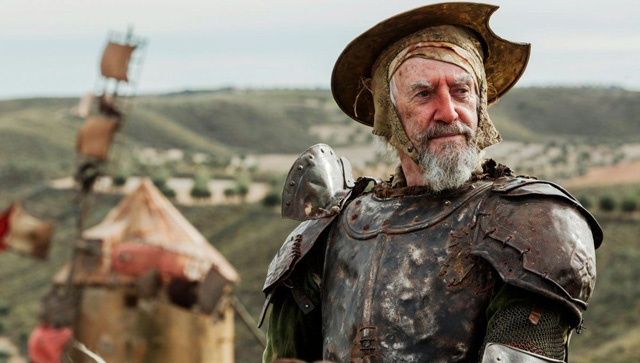
CS: You said “City of God” is one of your favorite films. My favorite movie of all-time is “Brazil”. It’s a real touchstone film for me, and I think a lot of people. And Terry Gilliam is my favorite director and I’ve loved that you guys have collaborated now four times. How does it feel after working with him over the past 35 years on movies?
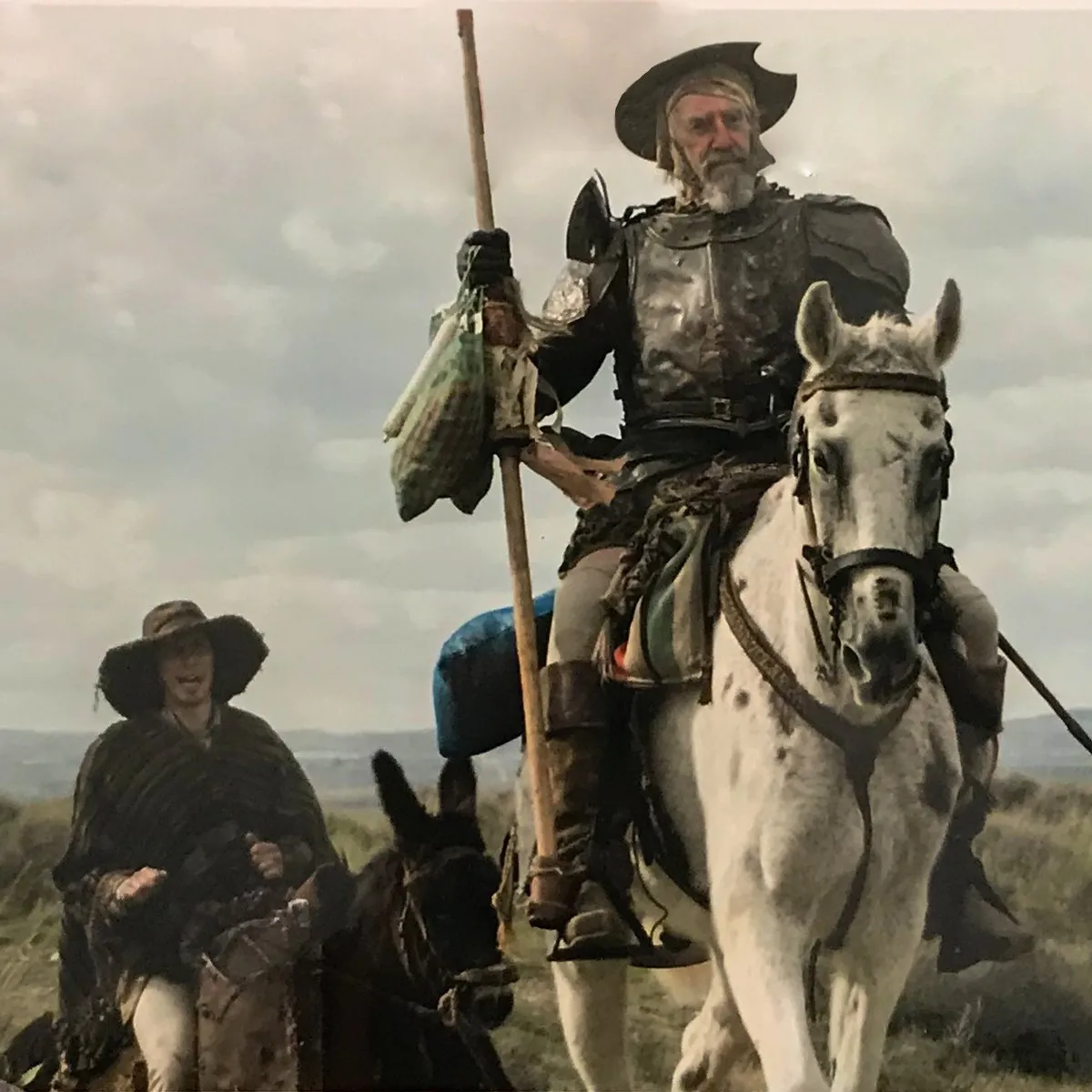
Pryce: Well, it’s rather like we spend some kind of lifetime starting with “Brazil”. I’d made a couple of films before “Brazil.” I made “Something Wicked This Way Comes” and “Ploughman’s Lunch.” But it was like the starting point for when I could begin to enjoy filmmaking, was doing “Brazil.” And I felt like a young man, I wasn’t that young. But now both of us, in later life, have come to “Quixote.” I think for both of us “Quixote’s” almost… I don’t know if Terry’s going to get to make another film. I hope he does. He hopes he does. But it was the rounding off of… I’m not going to say closure, that’s a terrible phrase to use, but it was a rounding off of our working relationship. So we got to do everything in “Quixote” that we could both dream of doing, and it was, you mentioned a gift of a role or a gift of a script, that “Quixote” was a gift of a script. And the good news about it is that it’s now being sold to America. It’s been seen in most of Europe. We’ve still got no sales for the UK yet. But it’s going to be released. I think it’s got a March time in the States.
CS: Yes, I can’t wait.
Pryce: It’s a fascinating film and it has, again, a bonus of Adam Driver, who I enjoyed working with very much, another Oscar nominee. I like to help people on with their careers, I said ironically. (laughs) I don’t want that to be misinterpreted. Yeah, no, I had a fantastic time with Terry and I got to do a lot of things that you don’t get to do in movies anymore—horse riding, jousting, poetry, singing, fighting, romance. It was all there.
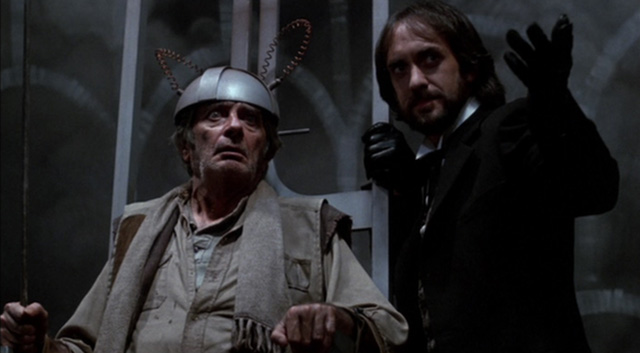
CS: So you mentioned “Something Wicked This Way Comes”, which I think is a very underappreciated movie that Jack Clayton did. And Clayton was a brilliant director. “The Innocents” is amazing, and him returning to the realm of the supernatural. I think it was made in a weird time at Disney, where they didn’t have their identity yet and they were trying to branch out into darker stuff. Can you talk a little bit about doing that film? Was it kind of a disappointment when it came out and people kind of ignored it?
Pryce: Yeah, well, it prepared me for the disappointment of “Brazil” not getting a proper release. It was a time of—it’s not quite turmoil, with Disney, but they didn’t have anyone in charge of production. They’d got even a young guy, or I think he’d come from distribution or publicity or something. And it was a time when they’d commissioned the film from Jack, who is one of the great storytellers. They’d commissioned a story film from him. By the time it was made and about to be released things were changing in the movie world and lots of special effects were in other films, very dramatic special effects. And they thought, “Oh my god, we’ve made the wrong kind of film.” So they held onto the film for a long time to put in some special effects and sort of jazz it up a bit, which held up the release. But it was a joy working with Jack Clayton. And also, I got to work with Jason Robards, who became on that film kind of mentor figure to me and talked me through the shenanigans of Hollywood. I really enjoyed my time with him. And it was—you know, he’d been there and done it, but he was a very generous, warm and talented person to be with.
The Man Who Killed Don Quixote
-
The Man Who Killed Don Quixote

-
The Man Who Killed Don Quixote
-
The Man Who Killed Don Quixote
-
The Man Who Killed Don Quixote
-
The Man Who Killed Don Quixote
-
The Man Who Killed Don Quixote
-
The Man Who Killed Don Quixote
-
The Man Who Killed Don Quixote
-
The Man Who Killed Don Quixote
-
The Man Who Killed Don Quixote
-
The Man Who Killed Don Quixote
-
The Man Who Killed Don Quixote
-
The Man Who Killed Don Quixote
-
The Man Who Killed Don Quixote
-
The Man Who Killed Don Quixote
-
The Man Who Killed Don Quixote
-
The Man Who Killed Don Quixote
-
The Man Who Killed Don Quixote