Among Us TV show creator Owen Dennis spoke with ComingSoon’s Tyler Treese about the new Paramount+ TV show. Dennis spoke about the process of adapting the video game, its unique opening segments, and more. All episodes of the show are currently streaming.
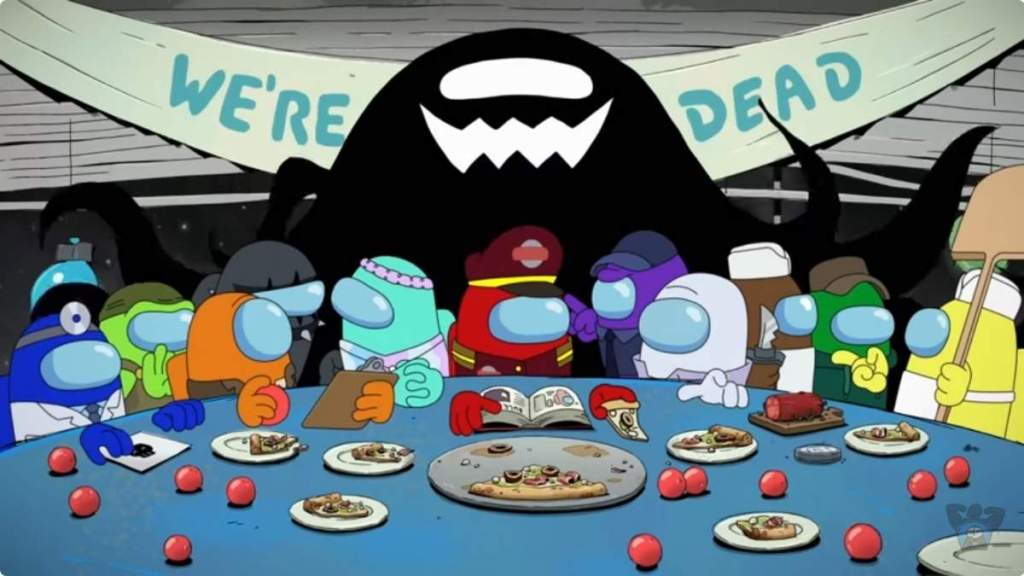
“Among Us follows a group of eccentric, monochromatic Crewmates of a ship transporting junk across the galaxy who must root out an Impostor in their midst before they fall victim to its villainous designs. The series is based on the globally popular multiplayer social deception game of the same name,” says the official synopsis.
Tyler Treese: Owen, there are a lot of Easter eggs from the game, fun stuff like the mini games being represented. How was it trying to tell your own unique story, which works because it’s a multiplayer experience, but also making sure fans were able to really know that you’re treating the source material with respect?
Owen Dennis: You have to think about what the source material is like. It’s important to play the game, try it out, and figure out what it is. I looked at what fans talked about with the game. I looked at what they thought about the game, characters, and things like that. And I made sure that I knew roughly what people expected out of an Among Us game.
If you know what people expect out of an Among Us game, you can kind of extrapolate into what they might expect out of an Among Us TV show, right? And so there are certain universal experiences that every person who plays the game experiences, right? So, like every person who plays the game, has been falsely accused of being the imposter and has been killed. Every person who plays the game has falsely accused someone else. And then they weren’t! Every single person in the game has been surprised by someone popping out at an event and being like, “That’s definitely the person who killed him. Let’s kill him.”
There are certain things like that that are just universal Among Us experiences, or being followed too closely by someone else, or stuff like that, just feel very universal in the game. And because there’s a universal game experience, you make sure those are at least addressed in some sort of plot point, in a way, in the show.
So when we were writing the show, we did sit down and go like, what happened? What has happened to you in the game? And like we wrote down all the different things that generally seemed to be the same between all of the writers and sort of worked off of that.
There’s also almost like a meta element. Like we see the map from the game during segments, and I’m pretty sure the VR Among Us Game is used for a scene in episode five. How was it kind of like sprinkling those in? Because I was getting a real kick outta that as a player of the game.
It was very fun. I love that stuff. I wanted to make sure that the show stands on its own. That any person who is watching the show doesn’t need to have played the game. But anybody who has played the game is going to get a few extra jokes and stuff here and there, like the top-down view of them walking around or whatever. The top-down view of them walking around is like, it’s a fun visual sort of thing, which, if you haven’t played the game, you’re just like, “Oh, it’s like sort of a fun visual thing.” But if you have played the game, you’re like, “Oh, it’s like the game,” and this is enjoyable in a way.
So I wanted to make sure that we, anytime that we included some sort of thing that the players would recognize, that anyone who is not a player would enjoy it on a level that is different. They can enjoy it on two different levels, but they both enjoy it no matter what.
I think my favorite bit from the show that I’ve seen so far is just everybody being so horny for Dan Stevens’ Blue. Obviously, Dan’s a dreamboat, but Blue just looks like the rest of them. How is it making sure each character has one or two elements that quickly define them, since we aren’t spending hours getting to know these characters?
Owen Dennis: Yeah. It’s hard. I’ve been working in the 11-minute format for… I wanna say 13 years at this point. So, I’ve just gotten very good at how quickly can you get a point across in like two seconds. And so that opening that first episode where it’s just a series of meeting different characters and going to different characters and stuff, like you basically have 20 seconds to be like, how much information can I get across in 20 seconds? And it’s a difficult thing. You have to be very aware of what is happening on screen, what are very aware of like what dialogue you say. Sometimes, I think people rely on dialogue a little too much. How do you show a character? How do you show a character is insane? We’ll have them say insane things, right?
How do you show that Lime is a weird conspiracy theorist who’s insane? Well, when Lime shows up, have them pop out even so they’re already like, ah, weird, right? And then also draw them as squiggly, like draw a line to be a squiggly line sometimes Lime doesn’t look like the other ones. Lime is like a weird sort of wiggly-looking thing. And so because of that, you’re already like, this is a strange situation, a strange-looking character. So things like that can really boost any sort of dialogue that you’re gonna do in there, which is something you can only really do in animation, which is fun.
I love that you guys update the intro each time a death occurs in the show. Can you just speak to making that intro really memorable and then making it this kind of living thing that progresses with the show?
Yeah, so our board supervisor, Geneva Hodgson, I asked her to do the intro for us. I was like, “The intro is gonna have to be something where each character shows up on screen. They kind of do a little bit of who they are, and then also we’re gonna kill them in the end, so we need space for them to be dead,” and like all sorts of stuff.
She did the whole thing, and I had no notes. I just looked at it, I was like, “This is great. Done. Let’s do it.” It was fun to be like, “Okay, every time someone dies, they’re gonna be dead in the intro as well”, which means like, oh, in the first episode, it’s normal, and the second episode there’s one character that’s dead and you’re like, “Oh, hi. He is dead, right? The character, they’re dead.”
But then by the time you get to the last episode, it starts getting real bleak. By the time you start getting to that last episode, you’re like, “Oh my God.” Like, it’s just rooms filled with blood and guts and just like death everywhere. That is very funny to me. I really enjoyed making those openings, but also, the openings were a little hard. Because sometimes we’d be like, “So who’s dead? This person’s dead and this person’s dead. Okay, well, no wait, that one’s not dead.” And then like having be like, “Oh wait, take that one back, put that back.” That sort of thing. But yeah, it was a lot of fun.
Thanks to Owen Dennis for taking the time to talk about Among Us.