Marvel fans are wondering why Wonder Man’s Episode 4, titled “Doorman,” is in black and white, while the rest of the season is not. This episode plays a very crucial role in the series, explaining why superheroes can’t act in movies and shows.
Here’s a breakdown of the episode and what it means.

Why Wonder Man’s Episode 4 was in black and white
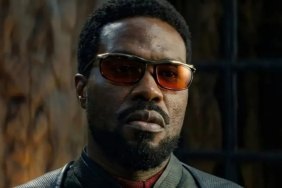
Marvel’s Wonder Man just premiered on Disney+, which follows the story of Simon Williams, played by Yahya Abdul-Mateen II, an aspiring actor who secretly harbors superpowers. He aims to land the leading role in the remake of the superhero film Wonder Man. However, there’s one caveat.
The film industry does not allow any superheroes to act in any major film or on television according to the Doorman Clause. Episode 4, “Doorman,” explains what this clause exactly represents and how it came in affect. The episode seems to be presented in black and white, as it’s a flashback sequence. Furthermore, it could be used as a stylistic and thematic choice.
Episode 4 revolves around DeMarr Davis, a doorman at the Wilcox Club. One night, while taking out the trash, he sees a Roxxon dumpster leaking a black sludge. After coming in contact with it, DeMarr is transported into a dark dimension with thousands of white doors all around him. Soon, he wakes up at his home, not understanding what just happened.
He realizes something is wrong with him when his dog, Chance, runs towards him. Instead of making contact, the dog goes through him and the floor, landing in the apartment downstairs. Later that night, a fire breaks out in the club, with everyone trapped inside. DeMarr uses his power and phases through the door, and asks everyone to go through him and exit the club.
After the heroic incident, DeMarr gained fame overnight, earning him the name Doorman. One of the people he saved in the club turns out to be actor Josh Gad, who offers him the job of his security guard. Eventually, Gad offers a role in his movie. In the movie, DeMarr uses his power to let the characters pass through him. His acting role further catapults him into more popularity.
However, things take a turn for the worse while shooting a similar scene for a sequel. Instead of Gad passing through, the actor gets lost in the void inside DeMarr. Months pass by, but the actor does not return, triggering massive backlash. In the aftermath, the Department of Damage Control (DODC) decides to keep an eye on DeMarr for life.
As a result, the film industry comes in unison and establishes a special clause named the Doorman Clause. As per the clause, the industry prohibits anyone with superpowers from taking part in movies and television in any way to prevent such accidents.
In the comics, Doorman is a superhero who wears a complete black suit, with white diamond eyes, a white cape, and white shoes. So, showcasing his origin in a black and white theme seems quite appropriate.
Furthermore, the theme also seemingly acts as a callback to WandaVision’s first two episodes. Both, Episode 2 of WandaVision and Episode 4 of Wonder Man, started in black and white and later transitioned into color by the end, though they portrayed different time periods. However, one thing that can be agreed on is that both episodes portrayed a dark and poignant story. This is a stark contrast to most Marvel projects.